




How Much Should a Small Business Invest in Marketing?
If you are a business owner, you have probably asked yourself this question at some point:
How much should we really be spending on marketing?
It is a fair question. Spend too little, and you may not see results. Spend too much, and it can feel risky, especially when cash flow matters.
The reality is that there is no one-size-fits-all answer. But there are clear guidelines that can help you make smarter decisions about your small business spend on marketing and feel more confident about where your money is going.
In this article, we will walk through what marketing includes today, typical budget ranges, why digital matters more than ever, and how to decide what makes sense for your business.

What Counts as Marketing Today?
Marketing is not just advertising anymore. It includes every activity that helps customers find you, trust you, and choose you.
For most companies, marketing falls into two main categories.
Digital marketing includes things like:
- Your website
- Search engine optimization (SEO)
- Online advertising such as Google or social media ads
- Email marketing
- Content and video
- Social media presence
- Marketing automation tools
Traditional marketing may include:
- Trade shows and events
- Sponsorships
- Print advertising
- Networking
- Direct mail
- Signage
- Promotional materials
- Public relations
Many businesses use a mix of both. But the most important shift over the past decade is this: most customer journeys now start online, even if the final sale happens in person.
That is why your small business spend on marketing often works best when digital is the foundation.

The Short Answer: What Businesses Typically Spend
A common rule of thumb is that businesses invest a percentage of their revenue into
marketing.
Typical ranges look like this:
- 5 percent to 8 percent of revenue for steady growth
- 8 percent to 12 percent for competitive growth
- 12 percent or more for aggressive expansion
For example, a company generating $1 million per year might invest between $60,000 and $120,000 annually depending on goals and competition.
However, percentages alone do not tell the full story. The right small business spend on marketing depends on your industry, your growth plans, and where you are starting from today.

Why Marketing Has Changed So Much
Marketing in 2026 is very different than it was even five years ago.
Customers are more informed. They research options before contacting companies. They compare competitors online. They read reviews. They expect professional websites and clear messaging.
At the same time, competition has increased. Even local businesses are competing with companies outside their region because the internet removes geographic limits.
Artificial intelligence has also changed how people search for information. Buyers may interact with AI tools before they ever visit your website.
All of this means one thing: visibility and trust matter more than ever.
Your small business spend on marketing is no longer optional overhead. It is part of how your business operates and grows.

Why a Digital-First Strategy Produces Better Results
A digital-first approach does not mean you abandon traditional marketing. It means your online presence becomes the foundation that supports everything else.
There are several reasons this works better for most businesses.
- Customers now start online. Even referrals often lead people to Google your company before contacting you. If your online presence is weak, trust drops quickly.
- Digital marketing is measurable. You can track leads, website visits, conversions, and return on investment. Traditional marketing is often harder to measure clearly.
- Digital efforts build over time. Search engine visibility and content continue working long after they are created, unlike a print ad that disappears when the campaign ends.
- Digital supports other channels. Trade shows, networking, and sales conversations all become more effective when prospects can easily learn about you online.
Finally, digital marketing scales more easily. You can adjust budgets faster than you can with many traditional campaigns.
Because of these factors, many companies see stronger results when most of their small business spend on marketing is focused on digital channels.
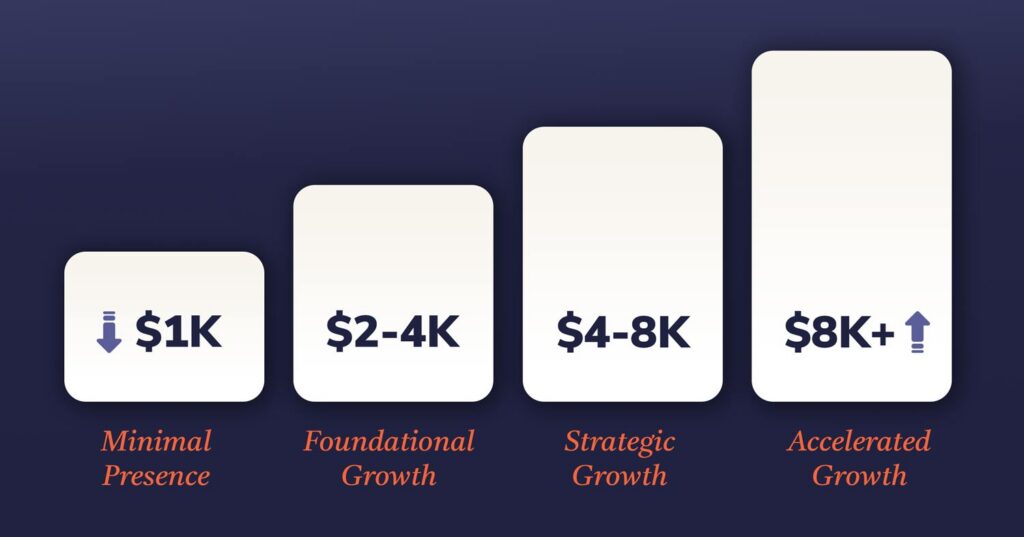
The Four Marketing Investment Levels
Not every business needs the same level of investment. Most companies fall into one of four categories.
Level 1: Minimal Presence
This usually ranges from $500 to $1,500 per month.
Activities may include a basic website, occasional social media posts, and networking.
Many tasks are done internally.
Results are often inconsistent. Businesses rely heavily on referrals and word of mouth.
This level works for very early startups or companies that are not focused on growth.
Level 2: Foundational Growth
This typically ranges from $2,000 to $4,000 per month.
Businesses begin improving their website, investing in basic SEO, running small advertising campaigns, and setting up email systems. Some traditional marketing like events or sponsorships may also be included.
At this level, companies start seeing more visibility and more consistent inquiries.
Level 3: Strategic Growth
This usually ranges from $4,000 to $8,000 per month.
Marketing becomes more coordinated. SEO, advertising, content, and conversion improvements work together. Analytics and tracking improve decision-making.
Businesses often see predictable lead flow and stronger brand authority.
Level 4: Accelerated Growth
This level starts around $8,000 per month and goes higher depending on goals.
Companies use integrated campaigns, multiple channels, automation tools, and ongoing content production. Marketing becomes a growth engine rather than a series of tactics.
Businesses aiming for aggressive growth or market leadership often operate at this level.

How to Calculate the Right Budget for Your Business
To determine your ideal small business spend on marketing, consider five factors.
- Revenue size matters because it determines available resources.
- Growth goals matter because faster growth requires more visibility.
- Customer value matters because higher-value customers allow for higher acquisition costs.
- Competition matters because crowded industries require more investment to stand out.
- Your starting point matters because businesses with little marketing infrastructure may need to invest more initially.
When these factors align, your marketing investment becomes more predictable and easier to justify.
Where Marketing Budgets Typically Go
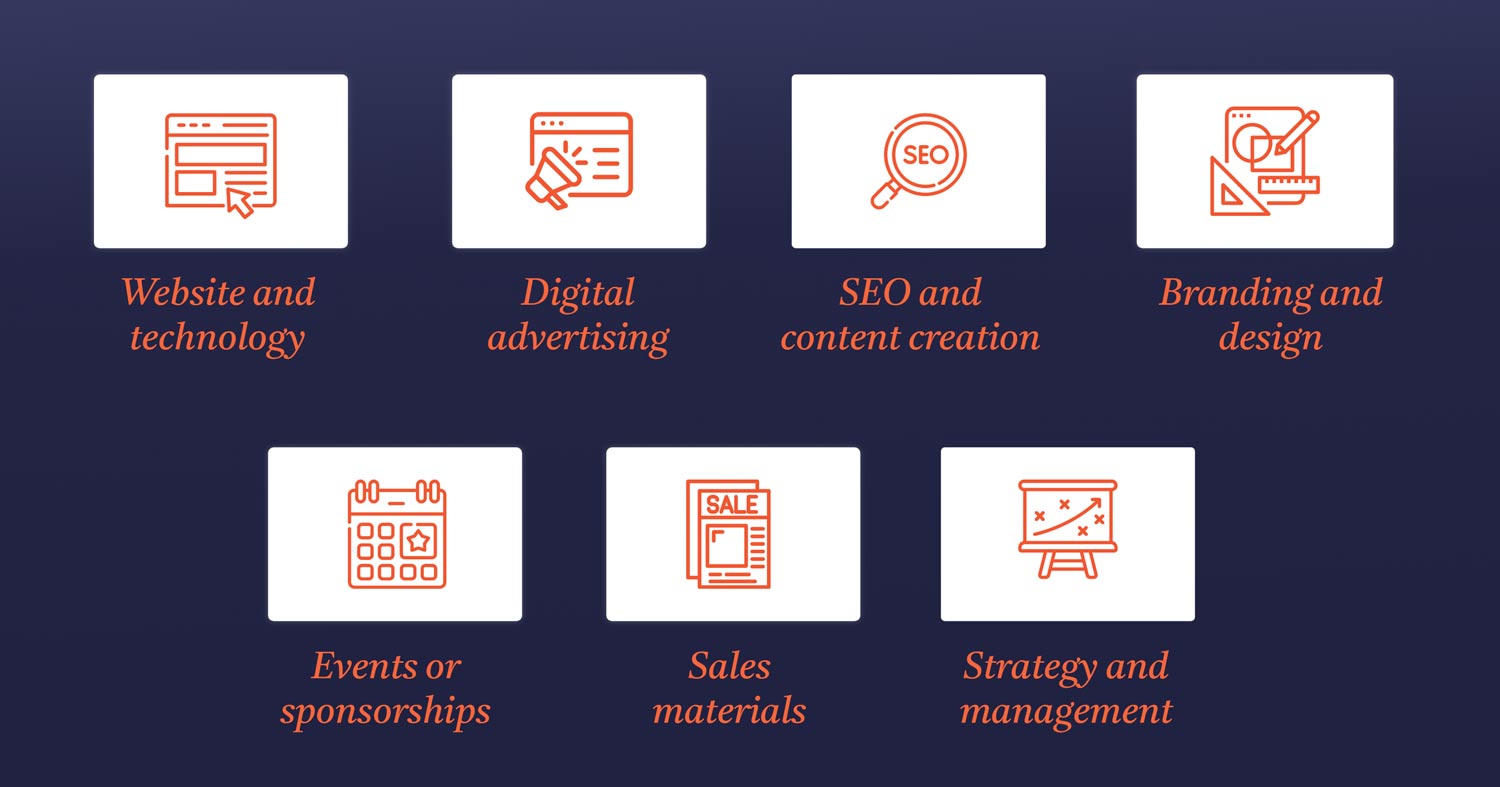
Marketing budgets are usually spread across several areas.
Common categories include:
- Website and technology
- Digital advertising
- SEO and content creation
- Branding and design
- Events or sponsorships
- Sales materials
- Strategy and management
Most businesses see the strongest long-term results when digital marketing receives the largest portion of the budget, even if traditional activities are still part of the mix.
What Happens When Businesses Spend Too Little
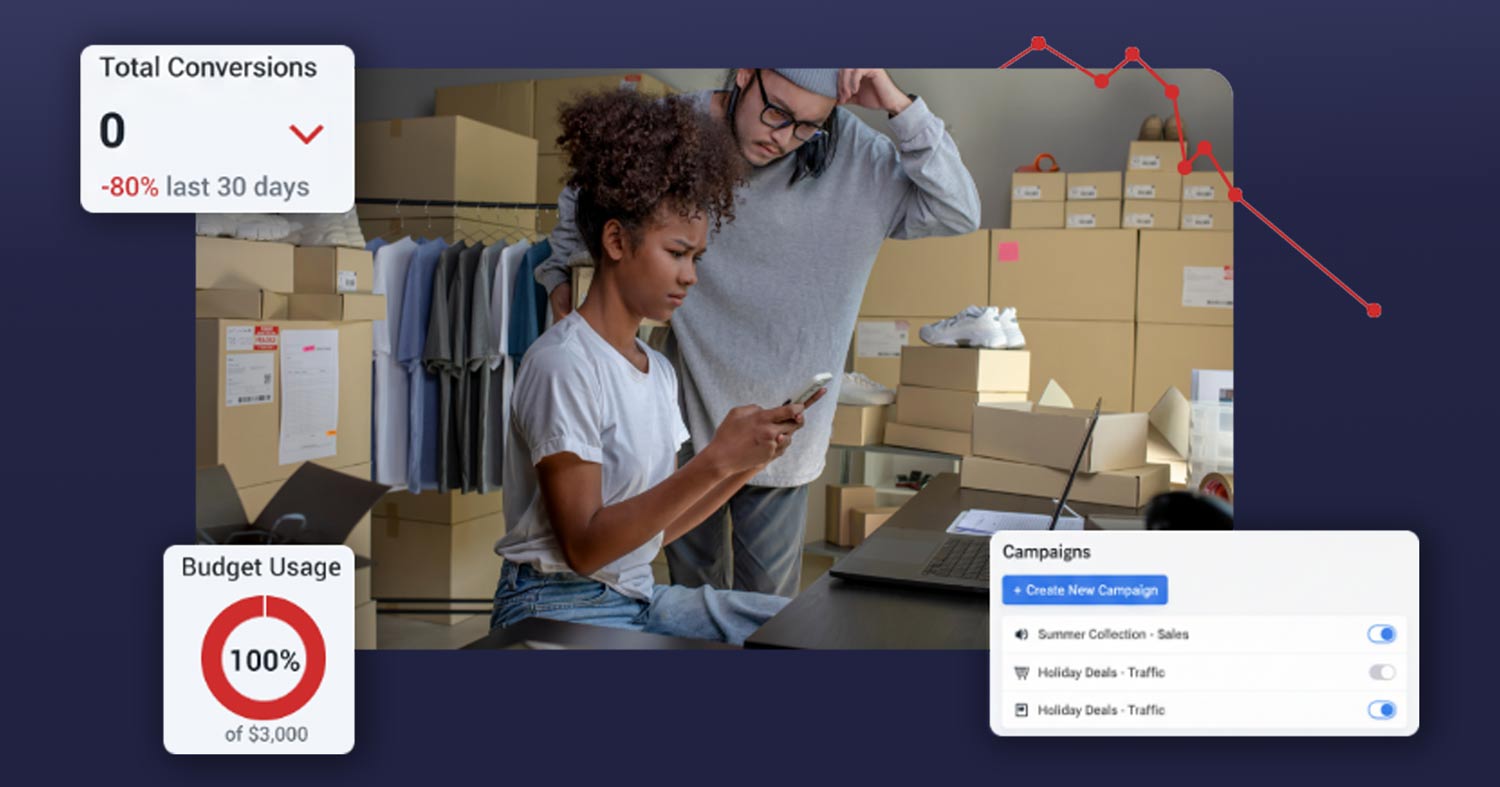
One of the biggest frustrations we hear from business owners is that marketing “does not work.”
Often, the real issue is underinvestment or inconsistent effort.
When the small business spend on marketing is too low, common problems appear:
- Websites receive little traffic
- Leads are inconsistent
- Sales teams struggle to fill pipelines
- Competitors gain visibility
- Marketing feels random and frustrating
The biggest risk is not overspending. The biggest risk is staying stuck because investment is too low to create momentum.
Common Marketing Budget Mistakes
Several mistakes can prevent businesses from seeing results.
Spending only on tactics without strategy is one of the most common. Businesses try ads, then SEO, then social media without a clear plan.
Choosing the cheapest option can also backfire. Low-cost providers often lack experience, which leads to poor outcomes.
Expecting instant results is another challenge. Marketing takes time to build trust and visibility.
Switching providers too frequently also slows progress. Consistency matters.
Understanding these pitfalls can help your small business spend on marketing produce stronger results.
When It Makes Sense to Increase Your Budget
There are clear signals that it may be time to invest more.
- You want to grow faster.
- Competition is increasing.
- Leads are inconsistent.
- You are launching new services.
- Your sales team needs more opportunities.
- You want predictable revenue rather than relying on referrals.
When these factors appear, increasing your small business spend on marketing often creates new momentum.

Marketing Is an Investment, Not Just an Expense
One mindset shift can change how marketing decisions feel.
Marketing is not just money going out. It creates visibility, trust, opportunities, and long-term growth.
When done well, marketing supports sales, stabilizes revenue, and increases business value.
Companies that treat their small business spend on marketing as an investment rather than a cost often see stronger outcomes over time.
How to Decide What Is Right for You
Every business is different.
The right budget depends on your goals, timeline, industry, and current situation.
Some companies need foundational improvements. Others are ready for strategic growth.
Others want to scale quickly.
The most important step is understanding where you are now and where you want to go.

Ready to Talk About Your Marketing Plan?
If you’re unsure what your marketing budget should look like, you are not alone. Many business owners are trying to make these decisions without clear guidance.
We help businesses build practical marketing plans based on their goals, resources, and growth stage.
If you’d like to talk through your situation and explore what could move you forward,
schedule a Virtual Coffee and let’s have a conversation about your goals and opportunities.
Let’s Talk Strategy

We are proud to partner with:




Pull up a chair and have a virtual coffee with Jonathan!
Follow up on a current project, talk about a new digital marketing idea, or just get some good ole’ fashioned business advice.