




The Problem Isn’t Blogging. It’s How You Pick Topics.
The hardest part of blogging isn’t writing. It’s deciding what to write about.
Most businesses understand that blogging is important. It helps with SEO. It supports sales.
It’s one of those things everyone agrees is “a good idea.” But when it comes to how to pick blog post topics, things grind to a halt.
So people do what seems logical. They open keyword tools. They scroll through trend lists. They peek at competitor blogs. They try to guess what Google might like.
And while none of that is technically wrong, it often leads to blog posts that don’t really do anything. They get some traffic, maybe a few clicks, but they don’t help people decide. They don’t shorten sales cycles. They don’t make your job easier.
That’s when blogging starts to feel like busywork, especially when you’re unsure how to pick blog post topics in a way that actually supports the business.
Here’s the surprising part: the best way to is already showing up inside your business.
You’re just not calling them “content” yet.
They’re showing up in your sales conversations.
Why Blog Topic Selection Feels So Hard
Most businesses try to pick blog topics by thinking harder.
- What should we write about?
- What keywords should we target?
- What will rank?
The problem is that this approach is backwards. It starts with assumptions instead of real questions.
And when that happens, you end up with blog posts that look fine on the surface but don’t connect to how people actually make decisions. Especially if you’re investing time and money into things like SEO, that disconnect gets expensive fast.
If your blog isn’t helping prospects understand value, reduce risk, or feel confident moving forward, you end up doing all that work one-on-one during sales calls instead.
That’s exhausting, and unnecessary.
The Goldmine You’re Probably Ignoring: Sales Conversations
Every sales conversation is full of clues about how to pick blog post topics that reflect real buyer concerns.
When someone reaches out, they’re not just asking about your service. They’re revealing what they don’t understand yet, what they’re nervous about, and what’s standing between them and a decision.
These questions aren’t random. They signal where trust still needs to be built and where clarity is missing.
That’s why sales conversations are such a powerful source of content ideas. They show you exactly what people need to know before they feel comfortable moving forward.
And here’s a rule we come back to again and again: if someone asks it on a sales call, someone else is typing it into Google.
When you use those real questions to pick blog post topics, your content stops being theoretical. It becomes genuinely useful, because it’s grounded in real decision-making, not assumptions.

What to Listen For (Without Overthinking It)
Once you know that sales conversations are where strong blog ideas come from, the next step is knowing what to listen for.
You don’t need a fancy system to pick blog post topics this way. You just need to notice patterns.
Questions That Come Up Early
These usually show up before someone is ready to buy. They’re trying to figure out if this even makes sense for them.
- “What’s the difference between this and another option?”
- “How does this actually work?”
- “Do I really need this?”
If you’re answering these regularly, they’re blog-worthy.
Concerns You Explain Over and Over
Cost. Time. Risk. Past bad experiences. These come up constantly, and for good reason.
If your team explains the same thing multiple times a week, your blog should be explaining it too. Especially if your growth strategy includes digital marketing and you want better-qualified leads coming in.

The Exact Words People Use
This one matters more than most people realise.
Customers don’t talk like marketers. They talk like humans trying to avoid making a bad decision. That language is incredibly valuable for both SEO and conversion.
A simple habit that works: after a call, jot down one thing the person seemed confused about.
That’s it. Do that consistently and you’ll never run out of blog topics.
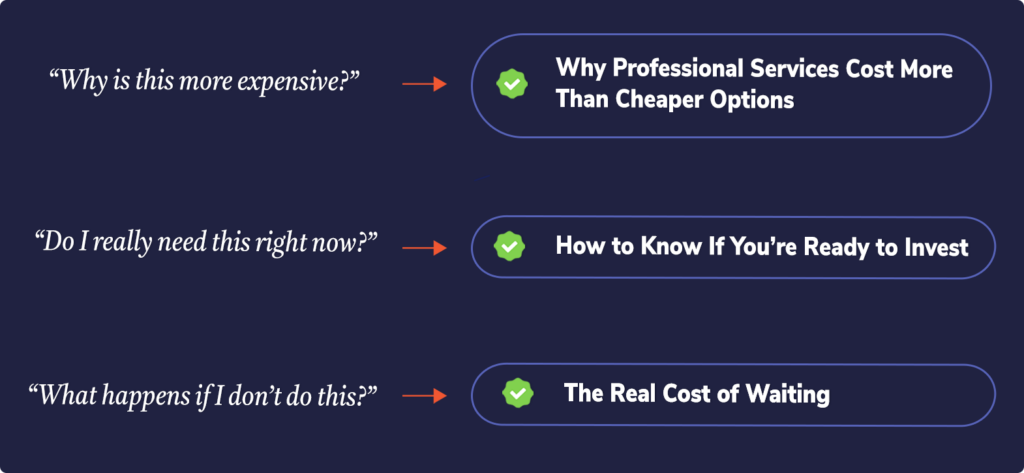
Turning Real Questions into Blog Posts
Once you start listening, it becomes surprisingly easy to pick blog post topics that actually support sales.
A question becomes a headline.
“Why is this more expensive?”
→ Why Professional Services Cost More Than Cheaper Options
“Do I really need this right now?”
→ How to Know If You’re Ready to Invest
“What happens if I don’t do this?”
→ The Real Cost of Waiting
These posts do more than attract traffic. They set expectations. They filter out poor-fit leads.
They help the right people feel more confident before they ever book a call.
And that’s exactly what you want if you’re serious about growth.
Don’t Ignore Lost Deals
Most businesses want to move on quickly when a deal doesn’t close. That’s understandable, but it’s also a missed opportunity.
When someone says:
- “We’re not ready yet”
- “We went with someone else”
- “It’s not the right time”
There’s usually something underneath that answer. Maybe the value wasn’t clear. Maybe the risk felt too high. Maybe expectations didn’t line up.
Those moments tell you where people got stuck. And that’s often exactly where your content can help you pick blog post topics that address real objections.
Lost deals aren’t failures. They’re feedback.

Blog Content That Handles Objections for You
Some of the strongest blog posts are the ones that address objections head-on.
Posts that explain:
- Why cheaper options often cost more in the long run
- What actually happens during an engagement
- Who your service is and isn’t a good fit for
- What realistic results look like
When people read these before reaching out, sales conversations change. Calls are shorter. Questions are better. And fewer conversations are spent explaining the basics.
This becomes especially powerful because your content is helping qualify leads before you ever talk to them.
Why This Works for Both SEO and Sales
From an SEO standpoint, this approach to pick blog post topics creates content people actually want to read.
Engagement goes up. Bounce rates go down. Traffic becomes more relevant.
From a sales standpoint, it builds trust early. Prospects show up informed. Conversations start further down the decision path.
The big shift is this: your blog stops being a separate marketing task. It becomes part of how your business sells.

How to Start This Week (No Big Plan Required)
You don’t need to overhaul everything.
Think about your last five to ten sales conversations. Calls, emails, DMs. What were people unsure about? What did you explain more than once?
Write those questions down. This is one of the simplest ways to pick blog post topics that are grounded in real conversations. Don’t over-polish it. Use customer language.
If you want to go one step further, loop in your team. Anyone who talks to customers can flag repeat questions as they come up. Before long, you’ll have a running list of topics that actually support growth, not just content output.
This works whether you’re focused on organic growth, better lead quality, or leveraging your digital marketing.

Make Your Content Do More Than Fill Space
At We Make Stuff Happen, we help businesses turn real conversations into content that supports search visibility and sales. Not more content. Better content.
If your blog feels disconnected from leads, or if you’re investing in digital marketing and want stronger results, let’s talk.
Book a Virtual Coffee appointment and we’ll walk through how to turn the conversations you’re already having into content that actually helps grow your business.
Schedule a Virtual Coffee

We are proud to partner with:




Pull up a chair and have a virtual coffee with Jonathan!
Follow up on a current project, talk about a new digital marketing idea, or just get some good ole’ fashioned business advice.