


Why “Spending More” Is Not the Same as Scaling
If you’ve ever run a digital ad and thought, “Well, that worked… should I just put more money into it?” you’re asking the same question almost every business owner asks.
It feels logical.
And sometimes it does work that way. But just as often, the opposite happens. You increase the budget, and suddenly results get worse.
Costs climb. Leads drop. You start wondering if the platform changed something, if your audience “got tired,” or if ads were never worth it in the first place.
This is where we want to slow you down and save you some stress.
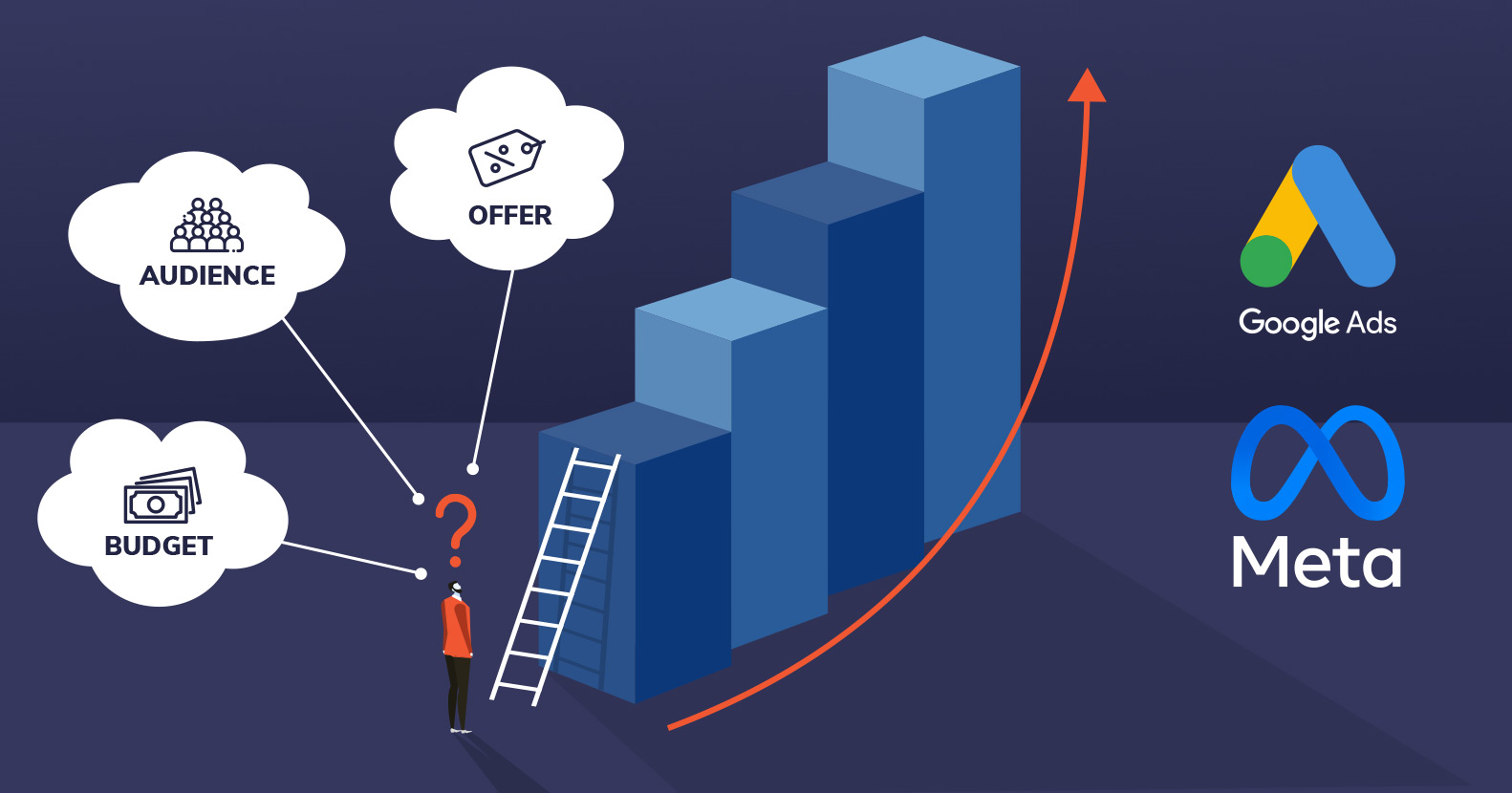
Scaling your digital advertising is not just turning up the volume. It is more like building a bigger engine. If your engine is not built for growth, pushing harder does not make it go faster, it makes it break down.
So let’s talk about what it actually takes to go from a first campaign to sustainable growth, without feeling like you are constantly guessing.
First, What Does “Scaling” Even Mean?
When most people say “scaling,” they mean “spending more.”
But real scaling has two parts:
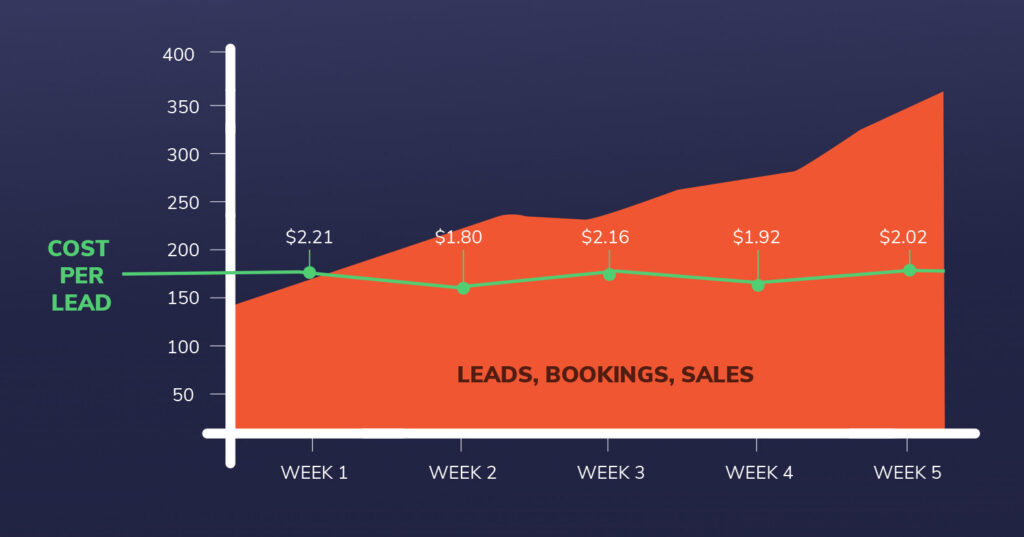
- More volume: more leads, more bookings, more sales
- Stable performance: your cost per lead or cost per sale stays within a range that makes sense for your business
If you get more leads but the cost doubles, that is not really scaling. That is just spending.
Scaling your digital advertising means increasing results without losing control of cost, quality, or consistency.

Stage 1: Your First Campaign (The Learning Phase)
Your first campaign is not about winning. It is about learning.
At this stage, your job is to answer a few simple questions:
- Are the right people clicking?
- Does your message make sense to them?
- Do they take the next step on your website?
This is where a lot of businesses accidentally sabotage themselves. They launch ads and expect instant success, then panic when the first two weeks are not amazing.
Here is the truth: early results are messy. That is normal.
This is also why scaling your digital advertising should not be on your mind in week one.
What you need first is a baseline.
Ads usually works best when:
- You pick one clear goal (leads, calls, purchases)
- You keep the budget reasonable
- You run it long enough to collect meaningful data
- You avoid changing everything every two days
If you don’t give the campaign time to run, you won’t get clear feedback. You just get noise.
A Quick Reality Check About Clicks
Clicks can feel exciting. They make it feel like something is happening.
But clicks are not the win. Conversions are the win.
If you are paying for traffic but nobody fills out your form, calls you, or buys, then the ad is not doing the job. And if that is happening, spending more will not fix it.
It is like pouring more water into a bucket with a hole.
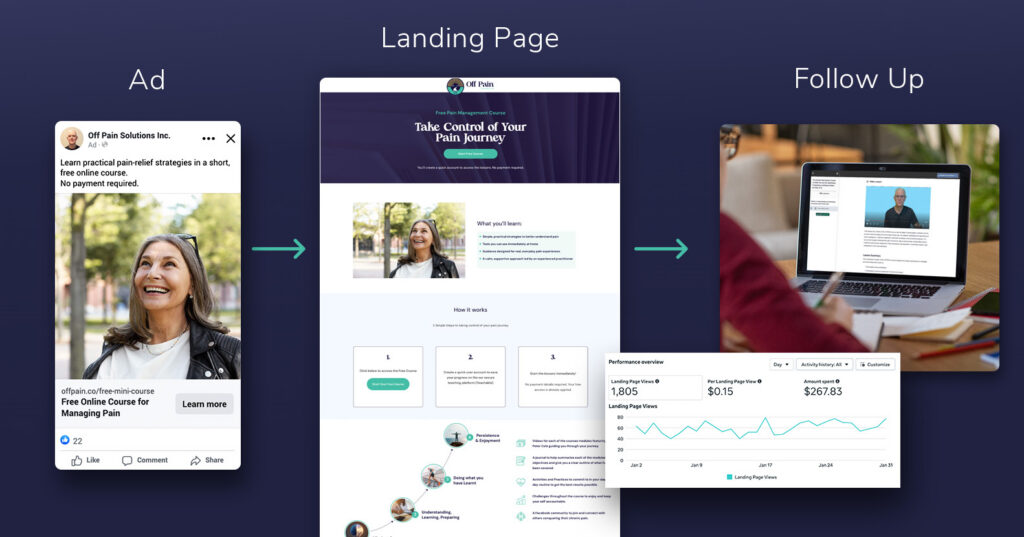
Before scaling your digital advertising, you want to patch the holes first. Usually those holes are:
- unclear offer
- confusing landing page
- weak call to action
- slow follow-up once a lead comes in
Stage 2: Optimizing (The “Make It Work Better” Phase)
Once you have data, this is where the real work begins.
Most sustainable growth comes from the boring stuff:
- improving the landing page
- tightening messaging
- refining targeting
- cleaning up your lead follow-up process
- watching the right metrics consistently
This is also where most people quit. Not because ads do not work, but because they expected instant results and didn’t plan for a learning curve.
Scaling your digital advertising starts here, even though you are not increasing spend yet.
Why? Because you are building the foundation that makes scaling possible later.
Think of this phase like tuning an instrument. You do not want to play the concert until the instrument is in tune.
Here are a few things we commonly optimize first:
1) The offer
Is your offer obvious and appealing?
Are you asking for a big commitment too early?
Sometimes the fix is as simple as making the next step easier, like “Get a Quote” instead of “Book a Consultation,” or offering a smaller starting point.
2) The landing page
Does the page match the ad?
Can someone understand what you do in five seconds?
Is the call to action clear?
3) The lead quality
Are you getting real prospects, or tire kickers?
If leads are unqualified, the problem is often targeting, messaging, or the way the offer is framed.
4) The follow-up
This one is huge. If your business takes two days to reply, your ads will feel like they are “not working,” even when they are. Speed matters.

Stage 3: Knowing When You Are Actually Ready to Scale
Here is the part most people skip: they never decide what “ready” looks like.
Before scaling your digital advertising, look for a few signals:
- Your cost per lead (or cost per sale) is fairly stable
- Your conversions happen consistently, not randomly
- You can tell which ads are driving the best results
- Your business can handle more demand without dropping the ball
Capacity is a real issue. If your team is already maxed out, scaling ads can create more problems than it solves. More leads is not helpful if nobody has time to respond, book, or deliver.
So yes, scaling is a marketing decision. But it is also an operations decision.

Stage 4: Scaling in a Way That Does Not Break Everything
Now let’s talk about what scaling looks like when it is done well.
First, scaling your digital advertising is usually gradual. Think 10% to 20% budget increases, not doubling overnight.
Why? Because platforms like Meta and Google are always learning. When you make big changes suddenly, you can throw off performance and trigger a fresh learning phase.
Here are a few reliable ways to scale without chaos:
1) Increase budget slowly on your best campaign
This is the simplest approach. Keep the structure the same, keep the message the same, and scale in small steps.
2) Expand audiences, not just spend
If you keep showing the same ad to the same group, you can hit a ceiling. Expanding audiences can unlock growth without pushing costs up as fast.
3) Add retargeting
Retargeting is one of the smartest ways to support scaling. You are following up with people who already know you, which often lowers cost per conversion.
4) Add a second offer
Sometimes you hit a ceiling because your offer only fits one type of customer. Adding a second offer, or a different entry point, can widen your results.
This is how scaling your digital advertising becomes a system, not a single campaign carrying all the weight.
Stage 5: Sustainable Growth (The Long-Term Phase)
This is where ads become predictable.
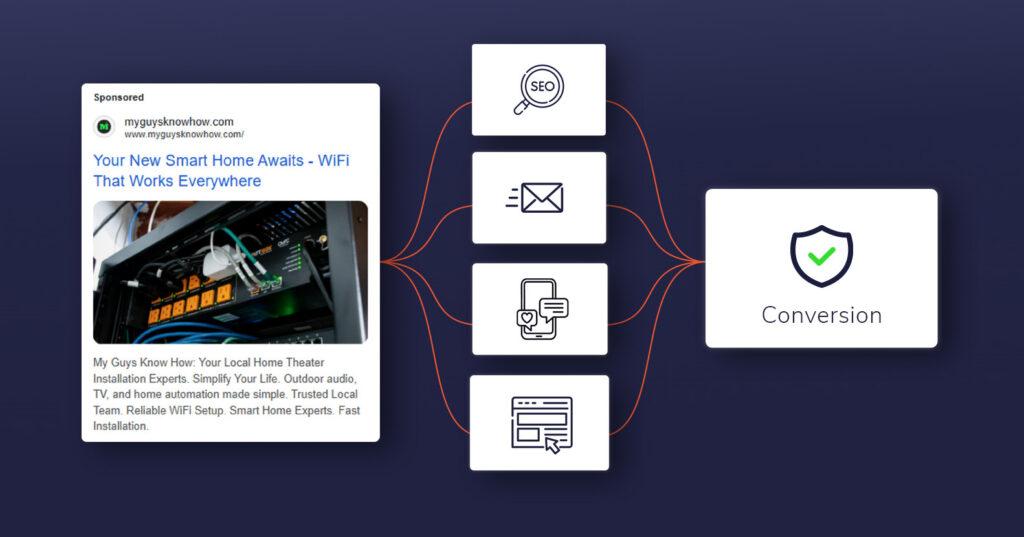
Sustainable growth happens when your ads are supported by the rest of your marketing, not working alone.
That includes:
- SEO and helpful content that builds trust
- an email list that nurtures leads
- social proof like reviews and case studies
- consistent branding and messaging across your website
- a follow-up process that converts leads into customers
At this stage, scaling your digital advertising feels less like gambling and more like managing a machine.
You are still testing and improving, but you are doing it from a stable base.
One big reason businesses struggle is they keep trying to scale ads while the rest of their marketing stays shaky.
Ads work best when they are part of an ecosystem.
The Big Takeaway
Scaling your digital advertising is not about hacks. It is about building a clear, steady process:
- Start simple
- Learn what works
- Improve what is weak
- Scale slowly
- Build systems that support growth
That is how you go from “we tried ads once” to “ads are one of our reliable growth channels.”

Ready to Talk It Through?
If you are trying to figure out your next step, or you are not sure why your ads feel inconsistent, we can help schedule a relaxed, no-pressure Virtual Coffee appointment.
We’ll talk through what you’ve tried, what your business goals are, and what a smart scaling plan could look like.
Schedule a Virtual Coffee
Pull up a chair and have a virtual coffee with Jonathan!
Follow up on a current project, talk about a new digital marketing idea, or just get some good ole’ fashioned business advice.


We are proud to partner with: